Tuesday, March 5, 2013

Welcome to the Neighborhood

View from the park across the street looking over Maborikaigan. The island is Sarashima Island, the only natural island in Tokyo Bay.


Sakuragaoka (桜が丘) is the name of our neighborhood in Yokosuka. It means "cherry blossom hills" (or heights). In actuality, we almost part of the neighborhood of Maborikaigan. The train station and the shopping area around it are about a 7 minute walk from our house.

Maborikaigan is one of the most popular neighborhoods in Yokosuka for military families since it's only about 4 miles from the base/central Yokosuka and very walkable. The homes are also quite large for Japan (not American large--we're talking 1300 sqft!). We're only about an hour by train from Tokyo so a lot of people live here and commute -- feels like Tacoma/Seattle in that way.


Walking down the street - our house is on the right. As you can see, we're on a slight hill.


You pass under the tracks and get to our local train station

Convenience store across from the station named "Three F"


Yakitori stand on the road to the station
Tiny (12 seats) tea cafe in the other direction where they have giant dessert waffles
Less than  minute from the station is our local grocery store, which is owned by Wal-Mart. Go figure! There is also a McDonald's.

Garden shop next to grocery store

Japanese-French bakery...think lots of cream or bean filled doughy pastries and melon pan

Vegetable store - our area is known for fresh produce


Florist and barber above

The stuff always flies off the shelves at this French bakery. They say it's one of the best in Yokosuka and I have to agree. Real crusty bread is so hard to find in Japan!


One of the many, many hair salons in our neighborhood. Taking care of your hair is important here!

Lovely walking path through the neighborhood - these pictures was taken in the summer, can you tell? :)

There is also a nice palm tree-lined promenade along the water (Yokosuka Kaigan Dori)


Peaceful place to go fishing


Sunday, February 17, 2013

Misaki and Jogashima


We went to the port town of Misaki (which is famous for tuna) and Jogashima island to view the daffodils that are blooming in abundance at this time of year on the Miura peninsula. This area is only about 30 minutes from our house so we'll definitely be back!

Narcissus tanzetta "Double Roman"
Walking amongst the daffodils was lovely since the smell was absolutely heavenly (daffodils smell??) and the daffodils are small and ruffly, unlike any I have seen before. Most of the ones I remember from the PNW are the large yellow variety that grew on the hillsides all over Tacoma.

 I discovered that these particular daffodils are not native to Japan; they are called Narcissus tanzetta "Double Roman." The reference to Rome comes from the fact that the varieties are believed to be native to the Mediterranean area and were actually spread by Roman soldiers, hence the name "Double Roman". Apparently, the bulbs help relieve muscle pain and are so poisonous they were used to end the life of suffering soldiers who were wounded badly and going to die.

So how did did several hundred thousand of them wind up growing in coastal Japan? They were brought from the Mediterranean through China via the Silk Road and carefully propagated by the local women. Who knew?


Fishing boats

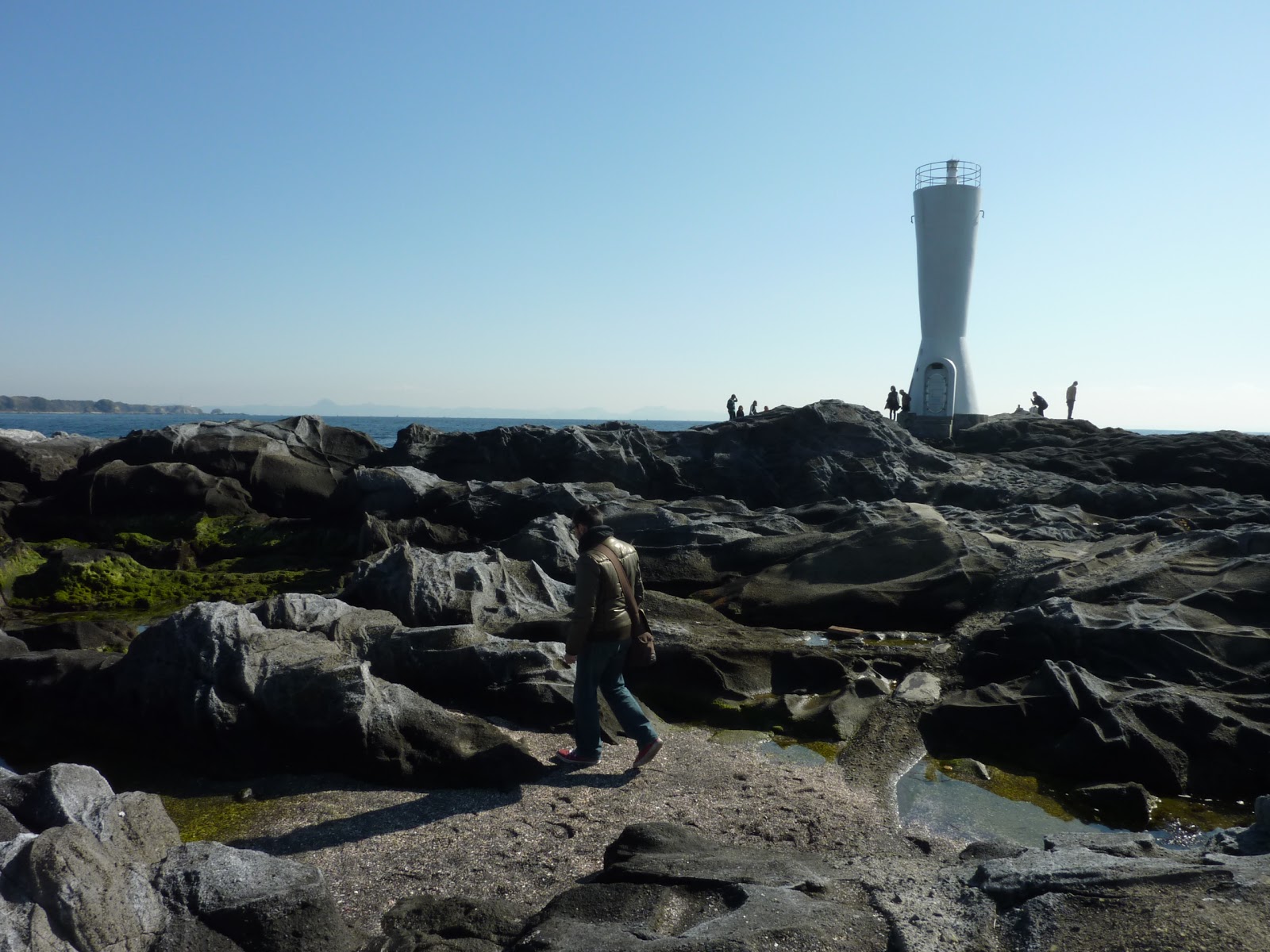
First lighthouse...kind of looks like a moonscape!


Lots and lots of tiny shells on the beach

Cormorants come here to overwinter

The second lighthouse


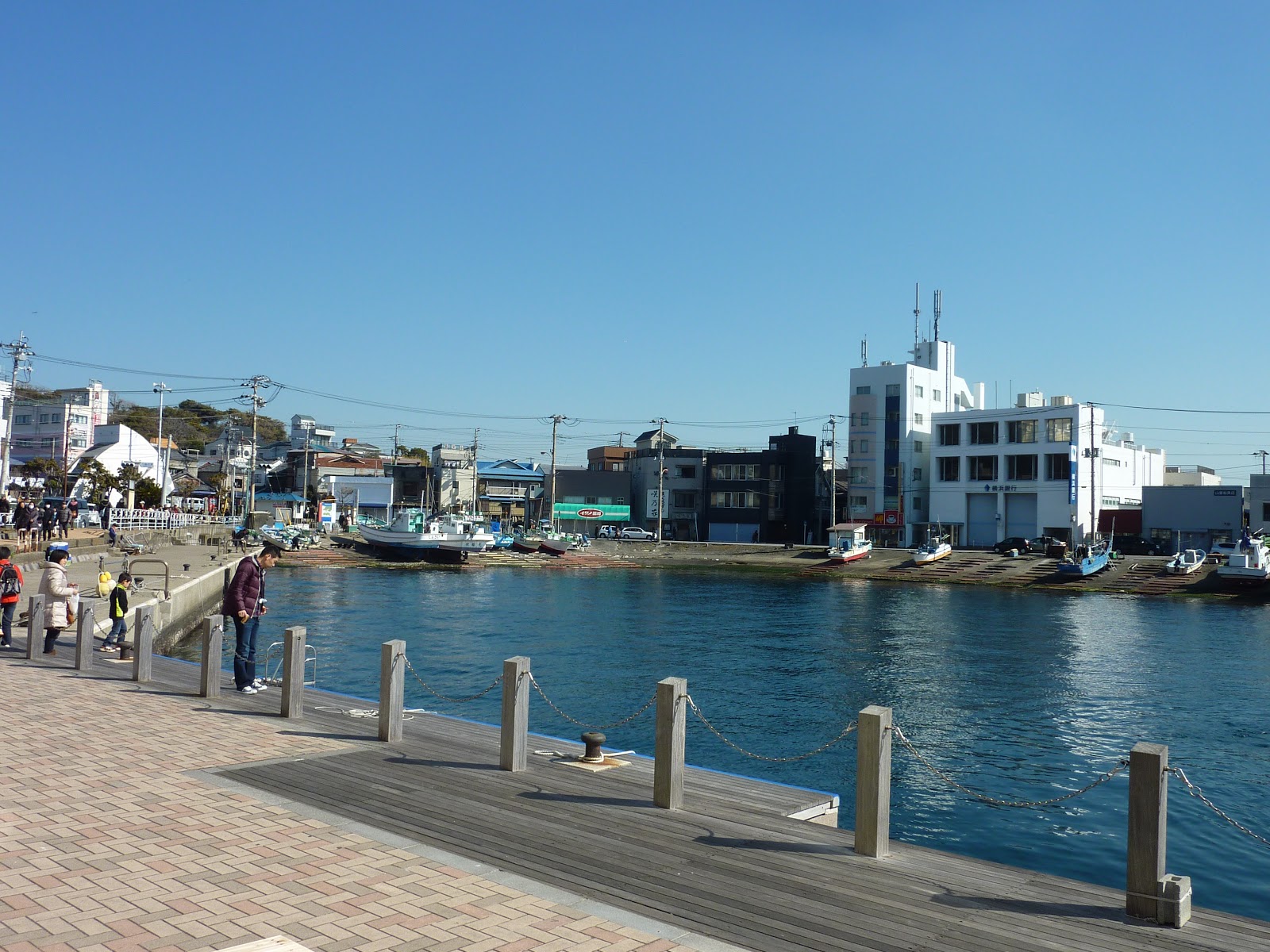
Misaki port

Note the large temple on the top of the hill

One of the many tuna restaurants in Misaki

Drying fish for sale

Big catch! ;)
Kainan Jinja, the shrine of the Miura Clan


800 year old tree at the shrine, which I'm sure looks a little bit better with a few leaves


Street in Misaki

Bridge that leads from the mainland to the island


Sunday, February 3, 2013

Yanaka

Yanaka is one of the oldest neighborhoods of Tokyo.  It is part of an area called the shitamachi (literally "low city"), which is not only a physically low area but an area that was inhabited by the lower classes during the Edo period (1603-1867). This area wasn't as badly damaged as many parts of Tokyo in the 1923 Great Kanto Earthquake and the firebombing during World War II. It used to be an old temple town so there are temples everywhere. 

 I liked this neighborhood a lot since it has a very different feel from most of the touristy areas of Tokyo, which move at a pretty frenetic pace. It was lovely for a Saturday stroll. Note all the snow that is still remaining almost a week after the big snowstorm on Coming of Age Day.

Yanaka ginza pedestrian shopping street

Remaining snow

Maneki-neko (beckoning cat)--raised left paw brings customers and raised right paw brings wealth

Traditional shop

Old temple and new highrise
Temple cat

This building had a camel and a robot on top. Why not? :)


Old earthen and tile wall from the Edo period 

Old Tokyo House

New Tokyo apartments and matching bike

View of the Skytree at dusk